
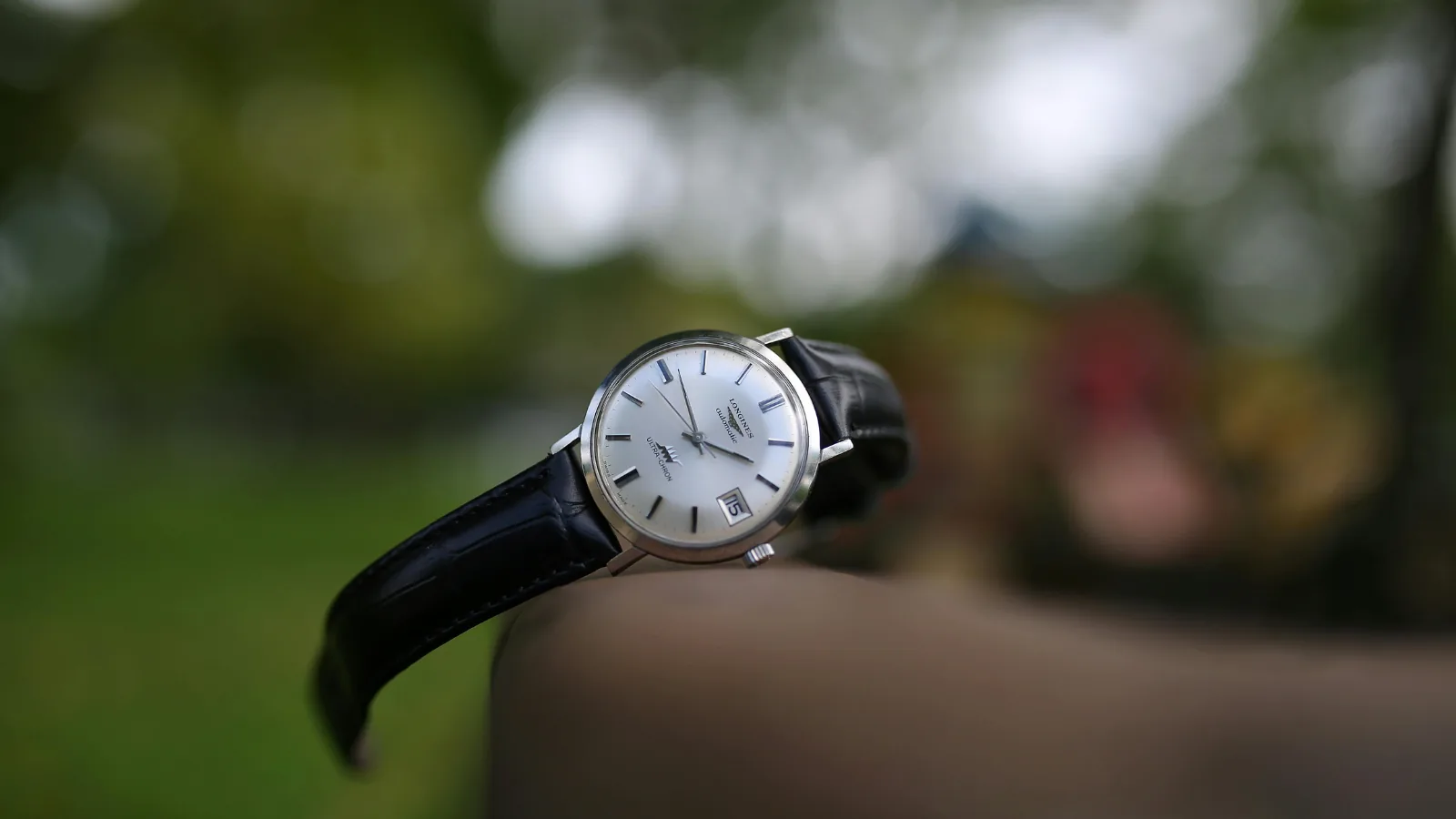
Across centuries, wedding gifts have translated spoken vows into tangible form. In contemporary luxury culture, few objects perform that role with greater precision than a watch. Unlike ceremonial gifts that remain tied to a single day, a finely made timepiece enters daily life and gathers meaning through repetition — worn to meetings, anniversaries, departures, arrivals, and the quieter rituals that define a shared life after the celebration itself.
Among the most enduring gifts in modern horology, a wedding watch stands apart: not an accessory bought for the occasion, but a reference chosen to accompany married life long after the ceremony. At its best, it becomes the first heirloom of a new family chapter — selected not for short-lived excitement, but for the confidence that it will still feel right decades later. That logic is especially visible across the most established Swiss watch houses, where permanence matters more than novelty.
Beyond Ornament: The Watch as Foundational Heirloom
A wedding watch should not simply commemorate a date — it should remain relevant to the decades that follow.
A wedding watch is not chosen in the manner of an accessory. It is chosen in the manner of an artifact. That difference is what separates a tasteful purchase from a meaningful one.
Unlike objects tied to a single event, a watch is carried through ordinary life. It acquires intimacy through use rather than display. For that reason, a wedding reference should satisfy three conditions before any discussion of brand prestige begins.
- Timeless aesthetic coherence
- Mechanical longevity
- Intergenerational relevance
In practical terms, that means a design that will not date quickly, a movement that can be serviced for decades, and a style a future son, daughter, or spouse could still wear with conviction. This is not a question of extravagance. It is a question of permanence. The right watch should feel entirely appropriate on the wedding day, yet equally convincing twenty-five years later.
Symbolism and Structural Integrity
A wedding gift should reflect stability. In watch terms, that means proven calibres, restrained proportions, and a design language that has already aged well over time.
- Proven movement construction
- Disciplined case proportions
- Design continuity across decades
Complications may deepen significance, but complexity without service continuity weakens the logic of the piece as an heirloom. The most successful wedding watches communicate restraint rather than spectacle. A balanced dial, a refined profile, and a brand language already proven to endure give the watch room to age with composure.
They should also be easy to wear beyond the ceremony itself — under a cuff, at work, while travelling, and on the ordinary days that give the gift its real meaning. In this context, confidence comes not from novelty, but from continuity. Marriage itself is an argument for duration; the watch selected to mark it should be built on the same premise.
Design Discipline: What Ages Gracefully
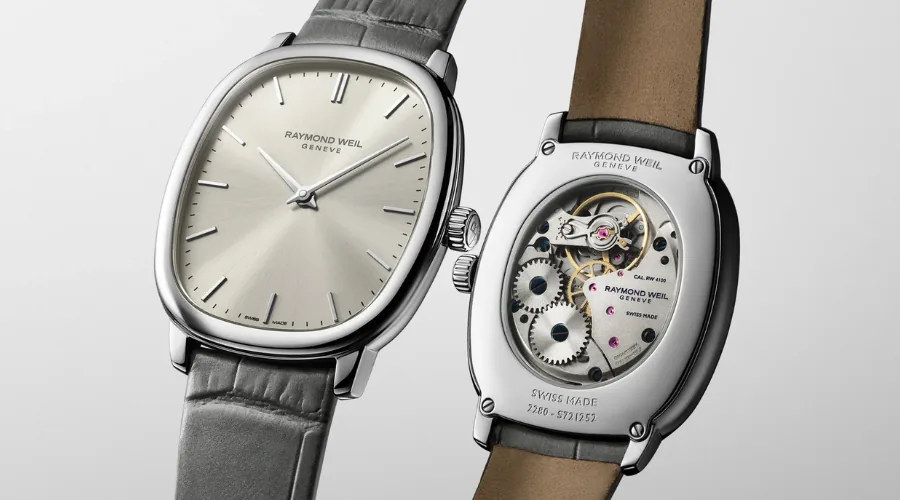
Wedding watches should resist fashion exposure. They do not need to look conservative, but they should avoid visual decisions too dependent on a particular moment in taste. Proportion is the first filter. In most cases, case sizes between 36mm and 40mm offer the most durable balance. At the more formal end, 36mm to 38mm usually reads as more elegant on a wedding day; 39mm to 40mm tends to work better for owners who want the watch to function as an everyday piece after the ceremony.
Dial treatment matters just as much. Neutral palettes — silver, white, black, deep blue, restrained champagne — retain authority because they do not depend on seasonal styling language. Classic metals and familiar finishing also tend to age better than aggressive experimentation. This same principle is visible across luxury watches under $5,000, where the strongest long-term references are usually those defined by proportion and clarity rather than visual excess.
Fashion fades quickly. Architectural balance does not. A wedding watch should look as natural at a later anniversary dinner as it did at the original ceremony.
What Actually Works Best as a Wedding Gift
In practice, three formats perform best in this category.
- A slim three-hand dress watch remains the most timeless and formal option.
- A refined everyday luxury watch offers more post-wedding versatility while still feeling appropriate at the ceremony.
- A restrained calendar or moonphase suits buyers who want a more symbolic object without sacrificing regular wearability.
A clean three-hand reference is usually the safest choice. A discreet date model works well for buyers who want more daily practicality. A carefully chosen moonphase or annual calendar can add emotional depth, but only when the complication supports wearability rather than turning the watch into an object reserved for rare occasions.
Illustrative References That Fit the Brief
At the entry to mid-luxury level, the Tissot Chemin des Tourelles remains a persuasive example of a wedding-appropriate dress watch: classical proportions, familiar styling, and enough restraint to age well. A Longines Flagship Heritage or similarly composed heritage-led reference moves the same logic higher, offering stronger archival character without becoming ostentatious.
For buyers who want a gift with more design identity, the Cartier Tank Must is one of the clearest alternatives to the conventional round dress watch. If the objective is everyday elegance with broader long-term wearability, an Omega De Ville Prestige sits comfortably in that space. Buyers looking for a more intimate heirloom object with engraving potential and strong family-story appeal may find the Jaeger-LeCoultre Reverso Classic especially convincing.
Where symbolic complication matters, a restrained Longines Master Collection Moonphase makes more sense than chasing excessive mechanical drama. And for those who want quiet refinement rather than overt brand signalling, a Grand Seiko Elegance reference can be an unusually intelligent choice: discreet, beautifully finished, and less exposed to trend-driven fatigue.
Mechanical Considerations for Generational Longevity
An heirloom must be emotionally durable, but also mechanically survivable. That means prioritizing movements that are well documented, serviceable, and supported by brands with real institutional continuity. A beautifully designed watch becomes less persuasive as an heirloom if long-term maintenance is uncertain or unnecessarily fragile.
As a rule, a wedding watch should be easier to maintain than to explain. Parts availability, long-running calibres, and a credible service network matter more here than technical novelty. Historic maisons with established production histories and global service infrastructure offer a different kind of reassurance. They do not simply sell watches; they maintain ecosystems of care around them.
For a wedding gift, that matters. The reference should be capable of surviving ownership, transfer, restoration, and continued wear long after the original moment has passed. What is inherited should not be merely admired. It should still function.
The Emotional Weight of Complication
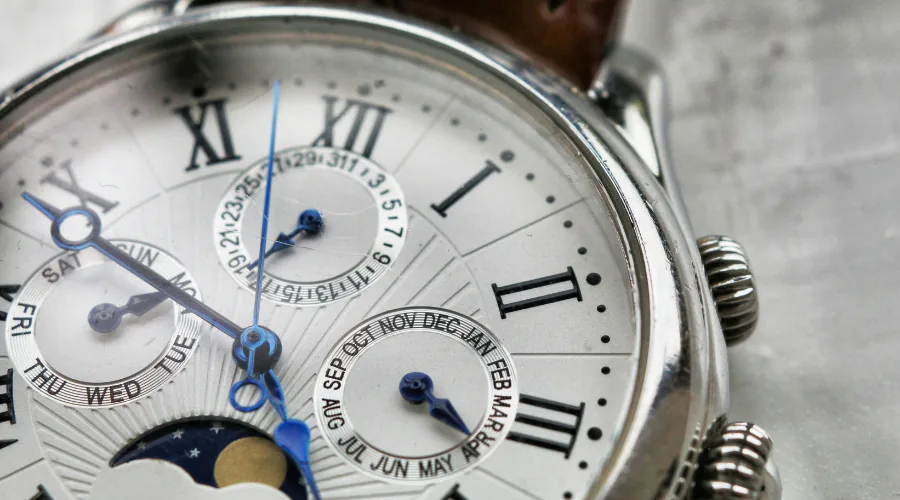
Although simplicity often defines timelessness, certain complications can deepen the symbolic charge of a wedding watch when chosen with discipline. A chronograph may suggest the marking of shared milestones. An annual calendar carries an implicit relationship to recurrence and return. A moonphase introduces a more poetic note, lending ritual and atmosphere to an otherwise measured object.
Yet symbolic value should not be confused with decorative complexity. A wedding watch should invite wear, not exile itself to a safe. Emotional resonance is strongest when it coexists with usability. The right complication should enrich ownership rather than intimidate it.
That is why simple calendars, moonphases, and restrained chronographs tend to make more sense in this category than fragile high-complication pieces that are expensive to service and unlikely to be worn often.
Practical Value: Buy for Longevity, Not Hype

A wedding watch should not be chosen as a speculative asset, but it should still be chosen intelligently. Design continuity, service stability, and measured brand positioning usually age better than short-term hype or overly volatile references — a framework adjacent to broader discussions around watches that hold value.
That does not mean reducing a wedding gift to capital logic. It means avoiding future friction. The strongest heirlooms are rarely the loudest; they are the easiest to keep wearing, servicing, and eventually passing on.
Engraving and Personalization
Few luxury objects accept personalization as naturally as a watch. A discreet caseback engraving — a date, initials, or a short phrase — can transform the piece from refined object into a narrative marker. The effect is not visual, but archival. It establishes the watch as a documented point of origin within a family story.
The key, as always, is restraint. In most cases, the strongest engravings are the shortest: a date, initials, or a phrase brief enough to remain intimate rather than performative. Long messages usually weaken the elegance of the piece. When executed with precision, personalization does not cheapen the watch. It secures its place in memory.
New or Pre-Owned: Which Makes More Sense?
For a wedding gift, buying new often feels emotionally cleaner: it marks a visible point of origin and usually comes with manufacturer warranty and immediate service clarity. A vetted pre-owned or neo-vintage reference can still work beautifully, but only when condition, originality, and future serviceability are fully understood.
In heirloom terms, romance should never outrun due diligence. Whether acquired through an authorized retailer or a carefully vetted secondary channel, the watch should arrive with the kind of integrity that supports a long ownership story rather than complicating it.
The best wedding watch is rarely the most complicated one — it is the one most likely to be worn, serviced, and loved for decades.
The Cultural Dimension of the Wedding Watch
Across cultures, horology has long symbolized maturity, responsibility, and transition into a new phase of life. A wedding watch intensifies that symbolism because it binds timekeeping to commitment itself. It suggests discipline, continuity, and deliberate inheritance rather than display alone.
- Commitment
- Stability
- Intentional legacy-building
Unlike jewelry selected primarily for occasion, a watch becomes part of everyday function. Its meaning is reinforced not through ceremony alone, but through continued presence. That is what gives it unusual emotional endurance.
Risk Layer: What to Avoid
Not every luxury watch is suitable for this role. Certain categories are structurally misaligned with the logic of a wedding heirloom.
- Trend-driven limited editions without long-term continuity
- Oversized cases tied to short-lived fashion cycles
- Brands without credible long-term service infrastructure
- Excessively delicate complications ill-suited to regular wear
- Watches chosen mainly for short-term visibility rather than long-term comfort and relevance
An heirloom should survive lifestyle evolution. Durability matters more than spectacle, and coherence matters more than novelty.
Final Assessment
Luxury watches endure as wedding gifts because they bridge emotion and structure with unusual elegance. They are mechanical witnesses to partnership, instruments of daily continuity, and potential family artifacts whose meaning expands rather than fades. When selected with discipline, they transcend celebration and become part of a longer family chronology.
The strongest wedding watches are not status purchases, but long-horizon selections — chosen for design coherence, service continuity, and the confidence that they will still feel right years after the ceremony. The best examples are not necessarily the most expensive. They are the easiest to keep wearing, servicing, and eventually passing on.
For buyers approaching the category seriously, wedding-appropriate references are best evaluated not by momentary visibility, but by wearability, mechanical survivability, and the dignity with which they will age across decades — much like the broader editorial thinking behind our collector selections.
A wedding lasts a day. An heirloom should last generations.


